
It happens without warning. You walk inside expecting cool air and instead find a wall of heat. Your thermostat reads 84°F and climbing. Outside, it’s 103°F and the Texas sun isn’t letting up. If you’ve lived in Fort Worth for more than one summer, you know this scenario – and you know it’s not just uncomfortable. In extreme heat, a broken AC can become a health emergency within hours.
This guide walks you through exactly what to do the moment your AC stops working, how to spot the warning signs before a full breakdown, and how to get fast, reliable emergency AC repair in Fort Worth, TX without overpaying or getting scammed in a panic.
Know the Risk
According to the CDC’s Heat Stress guidelines, indoor temperatures above 90°F can cause heat exhaustion in vulnerable individuals within 30–60 minutes – especially the elderly, children under 5, and anyone with a heart condition. A broken AC in a Texas summer is a medical concern, not just an inconvenience.
Step 1: Don’t Panic – Do These 5 Things First
Before you call anyone, take 5 minutes to run through these steps. They can prevent a small issue from becoming an expensive repair – and they help the technician diagnose faster when they arrive.
- Check your thermostat. Make sure it’s set to “Cool” and the temperature is below the current room temperature. Replace the batteries if it’s unresponsive — this is the #1 “emergency” that turns out to be a $4 fix.
- Check your circuit breaker. Find your electrical panel and look for a tripped breaker. AC units draw heavy power and trip breakers more often than most appliances. Reset it once — if it trips again, stop and call a technician. Repeated tripping means an electrical fault.
- Check your air filter. A severely clogged filter can cause the system to freeze and shut down. If it’s dark grey and thick with dust, replace it and give the system 2–3 hours to thaw before restarting.
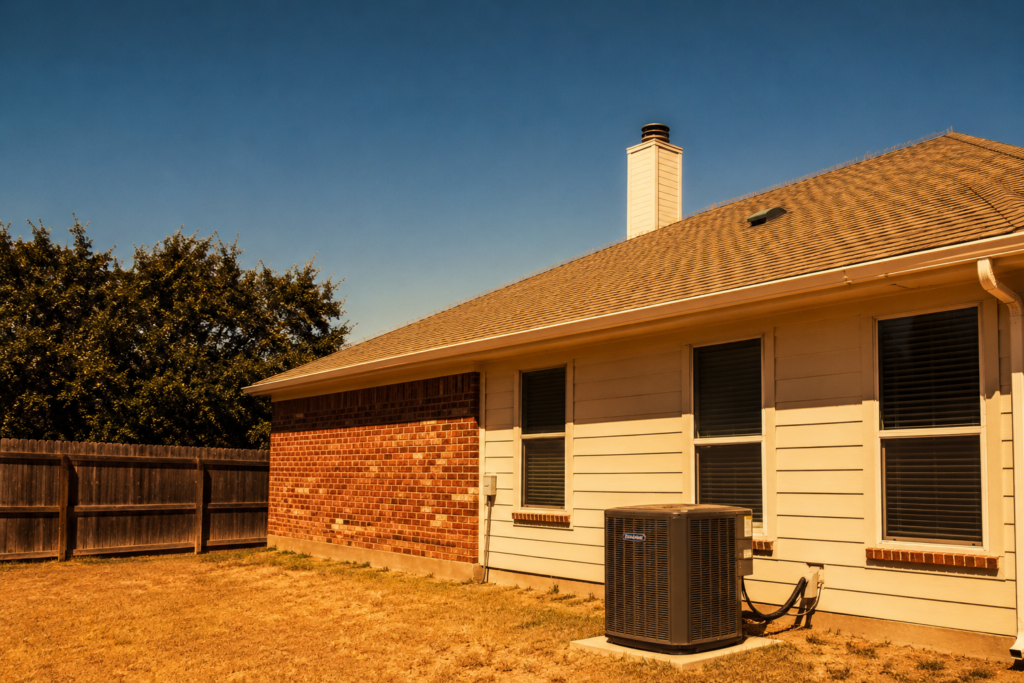
- Check the outdoor unit. Make sure it isn’t buried in debris, the fan is spinning (from a safe distance), and no ice has formed on the refrigerant lines. Ice is a sign of a refrigerant or airflow problem.
- Turn the system off and call a professional. Running a malfunctioning AC can cause compressor damage — the most expensive component in your system. If steps 1–4 didn’t fix it, switch everything off at the thermostat and contact an emergency HVAC technician.
📋 Related from Our Site
- Must-Know Questions to Ask Your Fort Worth AC Technician
- Seasonal AC Tune-Up Service — Prevent Breakdowns Before They Start
Warning Signs Your AC Is About to Fail
Most emergency AC breakdowns don’t happen without warning. The problem is most homeowners don’t know what to listen and look for. Here are the signs that your system is struggling – catch them early and you can often avoid the emergency call entirely.
Warm Air Your AC runs but blows room-temperature or warm air – refrigerant leak or compressor issue.
Weak Airflow Little air coming from vents despite the system running – failing blower motor or severe blockage.
Loud Banging or Grinding Any new mechanical noise means something is loose or failing inside the unit. Stop the system immediately.
Short Cycling The AC kicks on and off every few minutes without completing a full cooling cycle — overheating or low refrigerant.
Unusual Smells A burning smell suggests electrical issues. A musty smell points to mold in the ducts or drain pan. Both need immediate attention.
High Humidity Indoors Your AC should dehumidify as it cools. If your home feels sticky even when the system is running, something’s wrong.
If you’ve noticed any of these signs over the past few weeks, don’t wait for a full breakdown. Scheduling a system optimization service now costs far less than an after-hours emergency call.
What Causes AC Systems to Break Down in Fort Worth?
Fort Worth’s climate is uniquely brutal on HVAC equipment. Summers regularly push past 100°F, and the system runs nearly continuously from May through September – sometimes 16 hours a day. Here’s what typically causes breakdowns in our area:
Refrigerant Leaks
Low refrigerant is one of the leading causes of AC failure in Texas homes. The system can’t cool properly without the correct refrigerant charge, and leaks only get worse over time. Only a licensed HVAC technician can legally handle and recharge refrigerant under EPA Section 608 regulations.
Dirty Evaporator and Condenser Coils
Fort Worth’s dusty, pollen-heavy air clogs coils faster than in many other regions. Dirty coils make the system work harder, spike energy bills, and eventually cause overheating shutdowns. Annual evaporator coil cleaning is one of the most effective ways to prevent summer breakdowns.
Capacitor and Contactor Failure
These small electrical components fail frequently in extreme heat. A bad capacitor is often what keeps the outdoor unit from starting. The good news: it’s one of the least expensive AC repairs — usually $150–$350 including parts and labor.
Drainage Clogs
High humidity in summer means your AC pulls a lot of moisture from the air. The condensate drain line can become clogged with algae and mold, causing the system to shut off as a safety measure. This is a simple fix but often misidentified by homeowners as a major failure.

Did You Know?
The U.S. Department of Energy recommends having your AC serviced by a professional at least once per year – ideally in the spring before peak cooling season. Annual maintenance can extend system life by 5–10 years and reduce breakdown risk by up to 70%.
How to Choose the Right Emergency AC Repair Company in Fort Worth
When your home is 90°F at 10pm, you’re vulnerable to making a rushed decision. Bad actors in the HVAC industry know this – they rely on panic pricing and high-pressure sales tactics during emergencies. Here’s how to protect yourself:
Verify Their Texas HVAC License
In Texas, all HVAC contractors must hold a license issued by the Texas Department of Licensing and Regulation (TDLR). You can verify any company’s license in seconds on their website. If a company can’t provide a license number upfront, don’t let them touch your equipment.
Ask for a Diagnostic Fee Upfront
Legitimate companies charge a transparent diagnostic fee – typically $75–$125 – before recommending any repairs. Be wary of “free diagnostics” that result in inflated repair quotes, and equally wary of companies who refuse to quote you before starting work.
Get the Quote in Writing
Before any work begins, get a written estimate that itemizes parts and labor. A professional technician will have no problem providing this. If someone pressures you to approve work verbally or “right now,” that’s a red flag.
Check for Reviews That Mention Response Time
For emergency calls specifically, look for Google reviews that mention how quickly the company arrived. A company might do great work but take 6 hours to show up — in a Texas heatwave, that matters.
📋 Related from Our Site
- How to Choose Reliable AC Repair Services in Fort Worth
- AC Breakdown Statistics in Texas: A Fort Worth Focus
Repair or Replace? What to Decide During an Emergency
When a technician arrives and gives you a large repair estimate, you’ll face a quick decision: pay for the repair, or use this as an opportunity to replace the system. Here’s the clearest framework for that decision:
The 5,000 Rule
Multiply the age of your system (in years) by the estimated repair cost. If the result exceeds $5,000, replacement is usually the better financial decision. Example: a 10-year-old system with a $600 repair estimate = $6,000 → lean toward replacement. An 8-year-old system with a $400 estimate = $3,200 → repair makes sense.
Also consider: systems over 12–15 years old running on R-22 refrigerant (also called Freon) are expensive to maintain because R-22 has been phased out under EPA regulations and is now scarce and costly. If your older system needs a refrigerant recharge, the conversation about replacement becomes very real.
If you’re weighing a new installation, read our guide on the best time for AC installation in Fort Worth – timing your replacement can save you significantly on equipment costs.
Keeping Your Family Safe While You Wait for the Technician
If your household includes elderly family members, young children, or anyone with a health condition, don’t wait in a hot home for the technician to arrive. Here’s what to do:
- Move to the lowest floor of your home – heat rises, so the ground floor or basement will be coolest.
- Close blinds and curtains to block direct sunlight and reduce solar heat gain.
- Use fans to create airflow, but remember fans cool people, not rooms. Turn them off when no one is in the room.
- Stay hydrated – drink water every 15–20 minutes even if you don’t feel thirsty.
- If indoor temperature exceeds 90°F and you have vulnerable family members, relocate to a cooling center, library, or mall while you wait. Don’t tough it out.
Fort Worth operates cooling centers during extreme heat events – check the city’s official website or call 311 to find the nearest location during a heat emergency.
Serving All of Fort Worth and Surrounding Areas
Whether you’re in the heart of Fort Worth or one of the surrounding communities, our emergency AC repair team is ready to respond fast. We regularly serve homeowners and businesses in Azle, Grapevine, River Oaks, Westlake, and throughout the greater Fort Worth metro area. No matter your zip code, you deserve same-day service when temperatures are dangerous.
🚨 AC Down Right Now? We’re Ready.
Fort Worth’s heat doesn’t wait — and neither should you. Our licensed technicians are available for emergency AC repair across Fort Worth and surrounding areas. Fast response. Honest pricing. No panic charges.Call for Emergency AC Repair →
The Bottom Line
An AC breakdown in Fort Worth summer isn’t just an inconvenience – it’s a situation that demands fast, informed action. Run the basic checks first, protect your family from the heat, verify any contractor’s license before they start work, and don’t let panic lead to an expensive decision you’ll regret. If you’ve been putting off maintenance or noticed warning signs, now is the time to act – before the next heatwave arrives and every HVAC company in town is slammed with calls.
Stay cool, Fort Worth.
Leave a Reply