
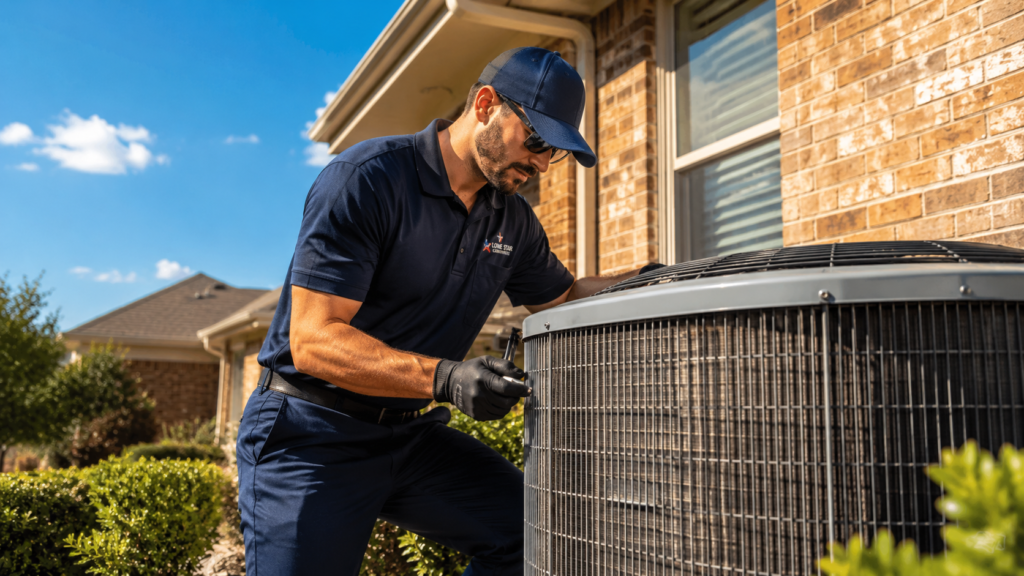
If you live in Azle, you already know summer doesn’t play around. Triple-digit afternoons roll in fast, and when your air conditioner suddenly can’t keep up, it’s more than an inconvenience – it’s a problem that needs answers quickly. If you’ve noticed your AC running constantly but your home still feels warm, or the air coming out of the vents just isn’t cold anymore, you’re not alone. It’s one of the most common calls we get from homeowners across Azle and the surrounding Fort Worth area.
The good news is that “AC not cooling” almost always traces back to one of a handful of causes, and most of them are easy to diagnose once you know what to look for. Below are the seven most common reasons your air conditioner might be blowing warm (or barely-cool) air, along with what you can check yourself and when it’s time to call in a professional.
1. A Dirty or Clogged Air Filter
This is, by far, the most common culprit – and the easiest to fix. Your air filter’s job is to keep dust, pet hair, and debris out of your system, but over time it gets clogged. Once that happens, airflow through your unit drops dramatically. Your AC has to work harder to push air through, which means less cool air actually makes it into your rooms, and in bad cases, the reduced airflow can cause the evaporator coil to freeze over entirely (more on that below).
What to do: Check your filter monthly during peak summer use. If you can’t see light through it when you hold it up, it’s time for a replacement. Azle’s dusty conditions and pollen seasons mean filters here often clog faster than in other areas, so don’t assume the standard 90-day replacement schedule applies.
2. Low Refrigerant Due to a Leak
Refrigerant is the substance that actually absorbs heat from your indoor air and releases it outside. Unlike fuel in a car, refrigerant isn’t something your system “uses up” – if the level is low, it’s because it’s leaking out somewhere in the line set or coils. Low refrigerant means your AC can still run, but it physically can’t remove enough heat from the air, so you’ll notice weak cooling, longer run times, and sometimes ice buildup on the copper lines outside.
What to do: This isn’t a DIY fix. Refrigerant handling requires certification, and simply “topping off” the system without finding and sealing the leak means you’ll be back to square one within weeks. If you suspect a leak, our refrigerant leak repair service can pinpoint the source and get your system back to full capacity.
3. A Dirty Condenser Coil
Your outdoor unit – the condenser – has a coil that releases the heat pulled from inside your home. When that coil gets caked in dirt, grass clippings, or pollen, it can’t release heat efficiently. The result is the same complaint every time: the system runs, but the air just isn’t as cold as it should be, and your energy bills quietly creep upward.
What to do: A garden hose and a gentle rinse (with the power off) can handle light buildup. But if it’s been more than a year since a professional cleaning, or if the coil fins look bent or packed with debris, our AC system cleaning or condenser coil repair services can restore proper heat exchange.
4. A Frozen Evaporator Coil
If you’ve looked at your indoor unit and seen actual ice or frost, this is likely your issue – and it’s usually a symptom of one of the problems above (restricted airflow or low refrigerant) rather than a standalone cause. A frozen coil can’t absorb heat properly, so warm, humid air just passes right by it.
What to do: Turn the system off (not just the thermostat – flip it to “off” so the compressor stops) and let it thaw completely, which can take several hours. Running a frozen system continuously can damage the compressor. Once thawed, check the filter first. If it re-freezes, that points to a refrigerant issue that needs a technician.
5. Thermostat Problems
Sometimes the AC unit itself is working fine – the thermostat is the weak link. A miscalibrated sensor, dead batteries, bad wiring, or a thermostat mounted somewhere it gets direct sunlight can all cause your system to cycle incorrectly or stop calling for cooling altogether, even though the house is warm.
What to do: Try replacing the batteries and double-check the settings (make sure it’s on “Cool,” not just “Fan”). If the display is blank, unresponsive, or the temperature reading seems way off from how the house actually feels, a thermostat repair or replacement may be needed.
6. Blocked Vents or Leaky Ductwork
Even a perfectly running AC unit can’t cool your home if the cool air never makes it to your rooms. Furniture blocking vents, closed registers in unused rooms, or – more seriously – ductwork with leaks, gaps, or disconnected sections in the attic can send a huge percentage of your cooled air straight into unconditioned space.
What to do: Walk through your home and make sure vents are open and unobstructed. If certain rooms are consistently warmer than others, or you can feel warm air seeping in around registers, duct sealing or a professional inspection is worth scheduling before you spend money chasing the wrong fix.
7. An Aging or Undersized System
Sometimes the honest answer is that the equipment itself is at the end of its life, or it was never sized correctly for your home to begin with. AC units generally last 12–15 years with good maintenance. Past that point, components like the compressor and capacitor wear down, efficiency drops, and the system simply loses its ability to keep up on the hottest Azle afternoons – no matter how clean the filter is.
What to do: If your system is older and you’re facing repair after repair, it’s worth getting a straight comparison of repair costs versus replacement. A failing capacitor is one of the most common “sudden death” causes for older units and is often a quick, affordable fix rather than a sign you need a whole new system – a technician can tell you which situation you’re actually in.
Why Azle Homes Are Especially Prone to These Issues
Azle’s climate and layout create a few conditions that make these seven problems show up more often – and more severely – than in some neighboring areas. The dry, dusty stretches between rain systems load up air filters and outdoor condenser coils faster than most manufacturers account for in their standard maintenance schedules. Many Azle homes also sit on larger lots with mature trees, which means condenser units often battle leaves, cottonwood fluff, and grass clippings for airflow throughout the growing season. And because temperatures here regularly climb into the high 90s and low 100s for weeks at a stretch, any inefficiency in your system – a slightly dirty coil, a slightly low refrigerant charge, a slightly undersized unit – gets magnified. A system that limps along acceptably in a mild climate simply can’t hide the same flaws when it’s fighting a Texas summer every single day.
That combination is why “AC not cooling” complaints tend to spike hardest in Azle during July and August, and why homeowners here often see the same unit need attention more frequently than a similar system in a cooler part of the state.
How to Avoid This Next Summer
Most of these issues share one thing in common: they’re far cheaper to prevent than to repair after the fact. A preventive maintenance plan catches dirty coils, low refrigerant, worn capacitors, and airflow problems before they turn into a no-cooling emergency in the middle of a heat wave.
When to Call a Professional
If you’ve checked the filter, confirmed the thermostat is set correctly, and your AC still isn’t cooling – or if you’re seeing ice on the lines, hearing unusual noises, or noticing a spike in your energy bill – it’s time to bring in a professional rather than keep guessing. Azle summers don’t leave much room for a slow diagnosis.
Our team at Fort Worth AC Repair serves homeowners throughout Azle and the greater Fort Worth area with same-day diagnostics and repair. If your AC isn’t cooling, contact us and we’ll get a technician out to track down the exact cause – not just treat the symptom.
Dealing with a full system breakdown rather than just weak cooling? Read our guide on what to do when your AC breaks down in the heat.
Leave a Reply