Fort Worth winters don’t stay cold for long, but when a cold snap hits, you need your gas furnace to work – not fail on the one night you actually need it. Because our winters are short, a lot of homeowners don’t think about their furnace until it stops blowing warm air, and by then a simple fix has often turned into an expensive repair or a full furnace repair call after hours.
The good news is that gas furnaces almost always give warning signs before they fail completely. Knowing what to watch for can save you money, keep your family safe, and mean the difference between a routine repair and a mid-winter breakdown. Most of the furnace calls we get in North Texas fall into one of the same handful of categories, which is why it’s worth knowing them before your furnace forces the issue. Here are seven signs your furnace is trying to tell you something — and what to do about each one.
1. Your Furnace Is Short Cycling
If your furnace turns on, runs for a few minutes, shuts off, and then starts right back up again, it’s “short cycling.” This isn’t just annoying – it’s hard on the system and drives up your energy bills because the furnace never runs long enough to heat your home efficiently.
Short cycling is usually caused by a dirty air filter restricting airflow, a failing thermostat sending bad signals, or a flame sensor that’s dirty or worn out. In some cases, it points to a furnace that’s oversized for the home, which is a design issue rather than a repair. Because the root cause varies so much, this is one of the signs best diagnosed in person – our thermostat replacement service and sensor calibration service cover two of the most common culprits.
2. Strange Noises: Banging, Rattling, or Squealing
A healthy furnace runs quietly, with maybe a soft whoosh of air. If you’re hearing banging, rattling, popping, or a high-pitched squeal, take it seriously.
- Banging or popping at startup often means dirty burners causing delayed ignition – the gas builds up slightly before igniting, creating a small explosion inside the furnace.
- Squealing usually points to a worn or slipping belt, or a motor bearing that needs attention.
- Rattling can mean loose panels, but it can also mean loose or failing internal components.
Motor bearing issues in particular tend to get worse quickly once they start, and they’re a common reason furnace blowers fail completely in the middle of a cold night. Our motor bearing lubrication and belt tension adjustment services address this before it becomes a full blower motor replacement.
3. Yellow or Flickering Burner Flame
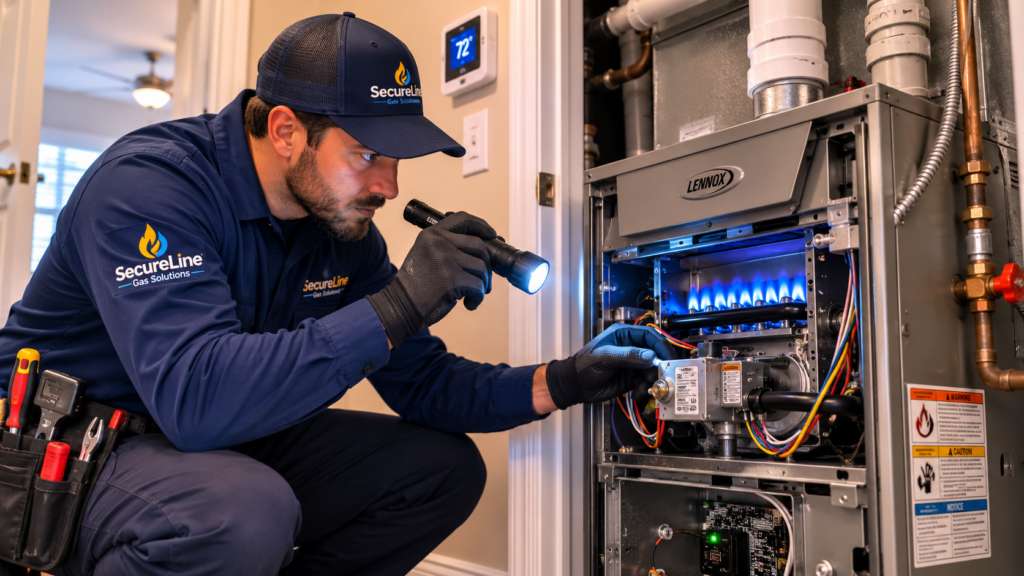
This one matters more than most homeowners realize. A gas furnace burner flame should burn a steady, crisp blue. If you look at your burners and see a yellow, orange, or flickering flame, stop and pay attention – this can be a sign of incomplete combustion, which produces carbon monoxide.
A yellow flame doesn’t always mean immediate danger, but it does mean the furnace needs to be inspected right away. If you also notice soot around the furnace, a burning smell, or your carbon monoxide detector goes off, treat it as an emergency. This is exactly the kind of issue our emergency AC repair team also handles for heating emergencies – don’t wait until morning to call.
4. Rising Gas or Electric Bills Without a Change in Use
If your heating bill is climbing but you haven’t changed your habits or the weather hasn’t changed much, your furnace is likely losing efficiency. This is often gradual, which is why so many Fort Worth homeowners miss it until the bill is significantly higher than the year before.
Common causes include a clogged air filter, dirty burners, worn-out ductwork, or a furnace that’s simply aging out of its efficient years. A seasonal AC tune-up – which for most of our customers doubles as a full HVAC system check going into winter – catches efficiency losses before they show up on a bill. Sealing leaky ductwork through our vent sealing repair service can also make a noticeable difference.
5. Uneven Heating Around the House
Are some rooms warm while others stay cold no matter how high you set the thermostat? Uneven heating is one of the most common furnace complaints we hear from homeowners in Azle, Grapevine, and Euless, where older homes often have ductwork that wasn’t designed for how the house is used today.
This can come from blocked or leaking ducts, a failing blower motor that can’t push enough air through the whole system, or dampers that need adjusting. It’s also one of the more solvable comfort issues – our zone control installation and system optimization service are both built specifically to fix rooms that never seem to reach the right temperature.
6. The Pilot Light or Ignitor Keeps Going Out
Older furnaces with a standing pilot light, and newer furnaces with electronic ignitors, can both develop the same frustrating problem: the flame won’t stay lit. If you find yourself relighting the pilot repeatedly, or the furnace tries to start and then shuts down before producing heat, something in the ignition system needs attention.
This is frequently a faulty thermocouple (on older units), a failing ignitor, or a dirty flame sensor that can’t detect the flame is lit and shuts the gas valve as a safety measure. Because this touches the gas supply and safety controls directly, it’s not a DIY fix – our control board repair and capacitor testing and replacement services cover the electrical components most often behind repeated ignition failures.
7. The Furnace Is Over 15 Years Old and Repairs Are Getting Frequent
Age alone isn’t a warning sign – but age combined with more frequent repair calls is. Most gas furnaces are built to last 15–20 years with regular maintenance. If yours is in that range and you’ve called for a repair more than once in the last year or two, you’re likely approaching the point where replacement makes more financial sense than continuing to repair.
A good rule of thumb: if a repair will cost more than a third of what a new furnace installation would cost, or if your furnace is over 15 years old and needs a major component replaced, it’s worth getting a straight comparison of repair versus replacement costs before you commit either way. Our team can walk you through that math honestly rather than just pushing whichever is more profitable for us.
It’s also worth checking your furnace’s efficiency rating if it’s an older unit. Furnaces installed more than 15 years ago are often 10–20% less efficient than what’s available today, which means an aging furnace isn’t just more repair-prone – it’s quietly costing you more every single month it keeps running, even on the days it works perfectly fine.
A Quick Note on Safety
A few of the signs above – flickering flames, repeated pilot or ignitor failures, and any burning smell – are worth treating differently than the others. Gas furnaces are safe appliances when they’re working correctly, but a malfunction that affects combustion can allow carbon monoxide into your home. If you ever notice a burning smell, soot, unusual condensation on windows near vents, or your carbon monoxide detector activates, turn off the furnace, ventilate the house, and call a professional immediately rather than troubleshooting it yourself.
Don’t Wait for a Complete Breakdown
None of these seven signs mean your furnace is guaranteed to fail tonight – but every one of them is your furnace telling you it needs attention before a small issue becomes a no-heat emergency. Homeowners across Fort Worth, Hurst, and North Richland Hills who catch these signs early typically pay a fraction of what an emergency after-hours repair costs.
If you’re noticing any of these signs, or you just want peace of mind before the next cold snap, our preventive maintenance plan is the most cost-effective way to catch problems early. And if your furnace has already stopped working, don’t wait it out – call us at (817) 402-9217 and we’ll get a technician out to diagnose the issue and get your heat back on.
Serving Fort Worth and surrounding communities including Azle, Grapevine, Euless, Hurst, and North Richland Hills.
Leave a Reply